

For global supply chains and cross-border e-commerce sellers, a utility or design patent infringement allegation is rarely about reaching a trial on the merits. Instead, plaintiffs weaponize the exorbitant costs of federal discovery and the strict risk-control policies of platforms like Amazon, Walmart, and Temu. A single infringement notice can trigger an immediate inventory takedown, freezing cash flow long before a judge ever reviews the case.
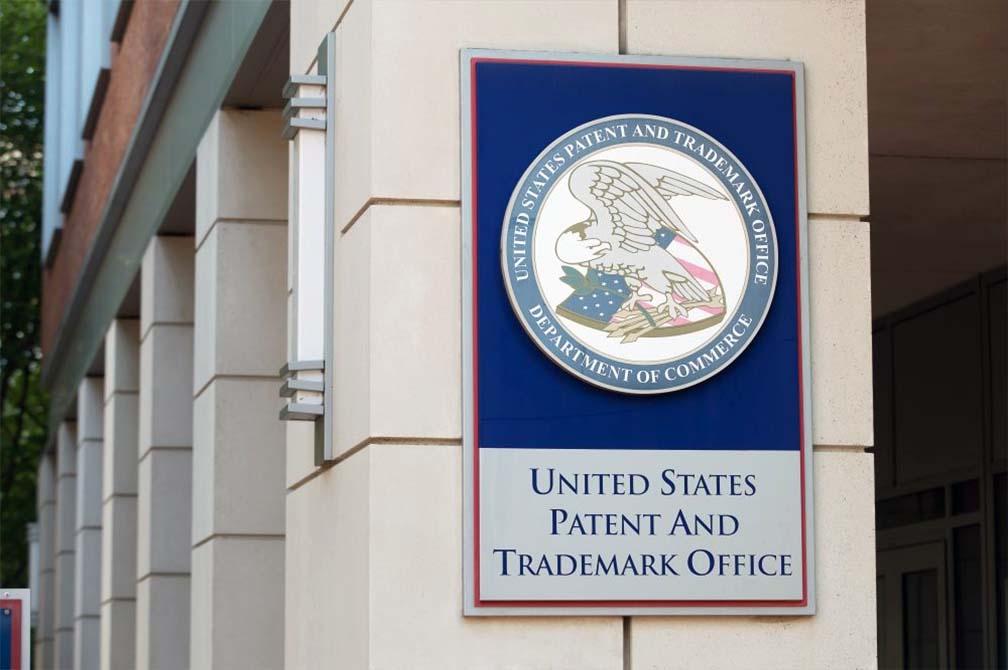
To neutralize this threat, defensive litigation in federal court is often insufficient. Strategic defense requires an asymmetric counter-offensive at the United States Patent and Trademark Office (USPTO). By parallel-tracking federal litigation with Post-Grant Proceedings—specifically Inter Partes Review (IPR) and Ex Parte Reexamination—defendants can dismantle the underlying asset, stay expensive court proceedings, and restore critical sales channels.
I. The PTAB Advantage: Lowering the Evidentiary Burden
Challenging patent validity in a U.S. District Court is an uphill battle. Issued patents enjoy a statutory presumption of validity, meaning a defendant must prove invalidity by "clear and convincing evidence." [1]
Shifting the battlefield to the Patent Trial and Appeal Board (PTAB) alters the math entirely. In an IPR or an Ex Parte Reexamination, the standard of proof is reduced to a mere "preponderance of the evidence." Furthermore, the USPTO applies the broadest reasonable interpretation (or the Phillips standard, aligning with district courts) but relies on technically trained Administrative Patent Judges or expert examiners rather than lay juries.
Inter Partes Review (IPR): A highly aggressive, adversarial proceeding focusing on invalidity based on prior art (patents and printed publications). It is the premier tool for completely invalidating weak utility patents asserted by non-practicing entities (NPEs) or competitors.
Ex Parte Reexamination: A more cost-effective, asymmetrical tool. Once a substantial new question of patentability (SNQP) is raised, the patent owner must defend their claims directly to the examiner without the heavy procedural costs of an IPR, creating significant administrative pressure on the plaintiff.
II. Forcing the Tactical Discovery Stay
The primary leverage of a patent plaintiff is the devastating cost of federal discovery—document production, interrogatories, and expert depositions.
Filing a robust IPR petition immediately opens the door to file a Motion to Stay the federal district court litigation. When evaluating a stay, courts consider: (1) whether a stay will simplify the issues in question; (2) the stage of the proceedings; and (3) whether a stay would unduly prejudice the non-moving party. [2]
Filing early is critical. Securing a stay effectively neutralizes the plaintiff’s leverage. It halts the bleeding of legal fees, forcing the plaintiff to spend their own capital defending the validity of their patent at the PTAB, drastically shifting the settlement dynamics.
III. Preempting E-Commerce Takedowns
E-commerce platforms operate as de facto arbiters of IP disputes, often executing takedowns automatically upon receiving a complaint to avoid secondary liability. Programs like Amazon’s APEX (Amazon Patent Evaluation Express) are designed to quickly resolve utility patent disputes, but they heavily favor the patent owner if the defendant has no structural defense.
A pending or instituted PTAB proceeding is a powerful shield in commercial negotiations and platform appeals.
Reinstatement Leverage: Submitting an official USPTO decision instituting an IPR or granting reexamination provides platform compliance teams with objective proof that the asserted patent is highly vulnerable.
Dismantling Trolls: A final written decision invalidating the patent acts as an absolute defense, immediately nullifying any platform-level strikes and clearing the path for the entire supply chain.
Strategic Takeaways for Cross-Border Operators
Relying solely on non-infringement arguments in a commercial dispute leaves the plaintiff's weapon intact.
Investigate Prior Art Immediately: The moment an assertion is made, launch a comprehensive prior art search, particularly targeting foreign databases (e.g., Chinese or European patent registries) that the USPTO examiner may have missed.
Race against the Clock: For IPRs, defendants face a strict one-year time bar from the date they are served with a federal complaint. Delaying the PTAB strategy waives this critical weapon.
Leverage Asymmetry: Use Ex Parte Reexamination to force the patent owner into a prolonged, costly defense with the USPTO, utilizing it as leverage to secure favorable, zero-admission commercial resolutions.
Citations & Legal Precedents
[1] Microsoft Corp. v. i4i Ltd. P'ship, 564 U.S. 91 (2011) (Supreme Court confirming that Section 282 of the Patent Act requires an invalidity defense to be proved by clear and convincing evidence in federal court, highlighting the tactical advantage of the PTAB's lower "preponderance of the evidence" standard).
[2] Murata Mach. USA, v. Daifuku Co., Ltd., 830 F.3d 1357 (Fed. Cir. 2016) (affirming the district court's broad discretion to stay litigation pending an IPR, particularly when the PTAB's review is likely to simplify the issues for trial).
[3] Cuozzo Speed Techs., LLC v. Lee, 579 U.S. 261 (2016) (upholding the PTAB's authority and rulemaking in conducting Inter Partes Reviews, cementing the IPR process as a primary mechanism for challenging patent validity outside of Article III courts).